.jpg)
Energy Management Solutions for Industry: How Much Electricity Is Your Factory Wasting Without an Energy Management System?

Walk through almost any factory floor, and you will find machines running longer than they need to, compressors idling overnight, and lighting left on in empty sections. None of this is intentional; it happens because most plants simply cannot see where their electricity is going. This is precisely the gap an energy management system is designed to close, giving plant managers the visibility they need to stop paying for power they never actually use. For manufacturers in the dairy and food processing sectors, electricity is often one of the highest recurring costs, which is why demand for practical energy management solutions has grown so quickly.

Why Every Factory Needs an Energy Management System An energy management system combines hardware, sensors, and analytics to help a business measure, control, and continuously improve how it uses electricity. Without one, most factories run on estimates rather than data. A pump running at full load when a lower speed would suffice does not trip an alarm, so inefficiencies accumulate quietly until the annual bill tells a story nobody wanted to hear. A properly implemented energy management system flags these patterns early, before they become expensive habits, and gives businesses the documentation to demonstrate responsible energy use.
The Role of an Energy Monitoring System in Spotting Waste
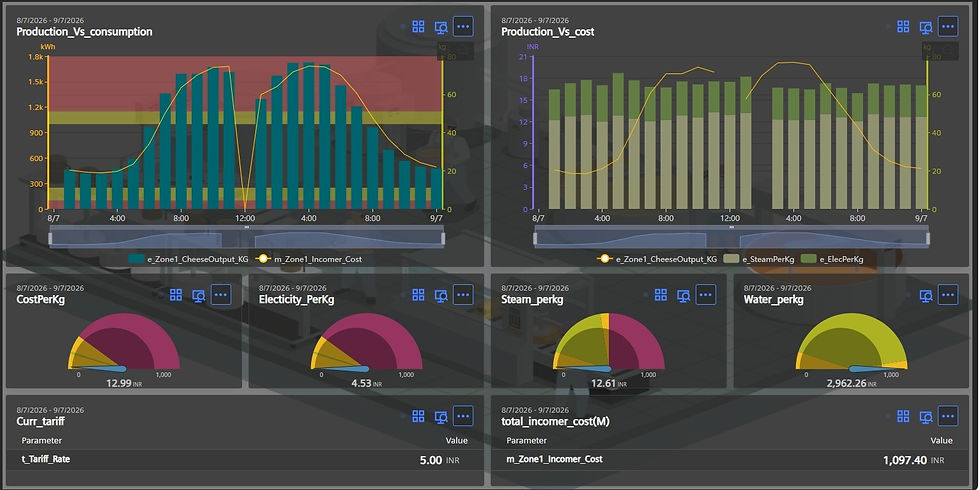
You cannot manage what you cannot measure, and this is where an energy monitoring system earns its place on the factory floor. Rather than one meter reading for the whole plant, an energy monitoring system breaks consumption down by line, machine, and shift, tracing waste back to its source. A plant manager using this kind of energy monitoring system can see almost instantly that a compressor is drawing more power than its rated load, a fault that would otherwise go unnoticed for months. Connected across sites, an energy monitoring system also supports industrial energy monitoring at scale, letting businesses compare plants and prioritise where it matters most.

How an Energy Audit Reveals Hidden Losses
Before installing monitoring technology, most businesses benefit from starting with an energy audit. A thorough energy audit typically covers:
Motors and drives – checking whether motors are running at loads that match their actual duty, since oversized units often run well below their efficient operating range.
Compressors and compressed air systems – identifying leaks, poor pressure settings, and units that continue running during periods of low demand.
Refrigeration and chilling equipment – reviewing temperature setpoints, insulation quality, and cycling patterns for signs of unnecessary energy draw.
Thermal processes such as pasteurisation – assessing heat retention, hold times, and recovery efficiency to spot avoidable losses.
Lighting and ancillary loads – flagging areas where consumption continues outside production hours or actual need.
The findings from an energy audit provide the baseline against which future improvements, including broader industrial energy solutions, are measured, giving businesses a clear starting point for prioritising investment.


Energy Management Software: Turning Data into Decisions
Collecting data is only half the job. The other half is making sense of it, which is the purpose of energy management software, turning raw sensor readings into dashboards and alerts that plant managers can act on. Good energy management software sets thresholds for expected consumption and flags a fault within hours rather than at month-end. Cloud-based energy management software also brings remote visibility, letting teams review consumption across several sites from anywhere, a capability well suited to broader industrial energy solutions for multi-plant operators.
Industrial Energy Monitoring and Commercial Energy Efficiency
The dairy and food sector presents particular challenges for industrial energy monitoring, since so much consumption is tied to pasteurisation, chilling, and clean-in-place cycles. Tracking the relationship between energy input and production output, rather than total kilowatt-hours alone, reveals problems that whole-plant metering never would. Savings should not stop at the factory floor either: commercial energy efficiency in offices, warehouses, and cold storage areas often gets overlooked, even though lighting and refrigeration in these spaces run continuously regardless of actual demand.


Choosing the Right Energy Management Solutions for Your Business
Not every factory needs the same starting point, and the right energy management solutions depend on the size of the operation and the budget available. A phased approach works well: begin with an audit to establish the baseline, introduce monitoring on the highest-impact equipment, then layer in energy management software to make the data actionable, expanding coverage as results prove the case.
Conclusion: Stop Guessing, Start Measuring
Every factory is losing some electricity to inefficiency. The only question is whether that loss is visible or hidden. A structured approach to measuring and controlling electricity use replaces guesswork with evidence, giving manufacturers the clarity to fix problems that have quietly inflated their bills for years.
At Goose Industrial Solutions, we work with dairy and food processing plants to design and implement energy management systems, from initial assessments through to full monitoring and software integration. Whether you need a focused industrial energy services engagement for one production line or broader commercial energy services across your entire facility, get in touch to find out how much your factory could be saving.


Comments